

The Skinny
🔥 AMD is bringing FSR 4 — yes, the AI-powered one — to older Radeon cards, and the implications for Valve's hardware are massive.
🧠 FSR 4 swaps the old hand-tuned algorithm for a proper machine-learning model, which means dramatically cleaner upscaling and way better frame times.
📺 Over 60 games already support FSR 4, with the list growing weekly now that AMD opened the floodgates beyond RX 9000-series cards.
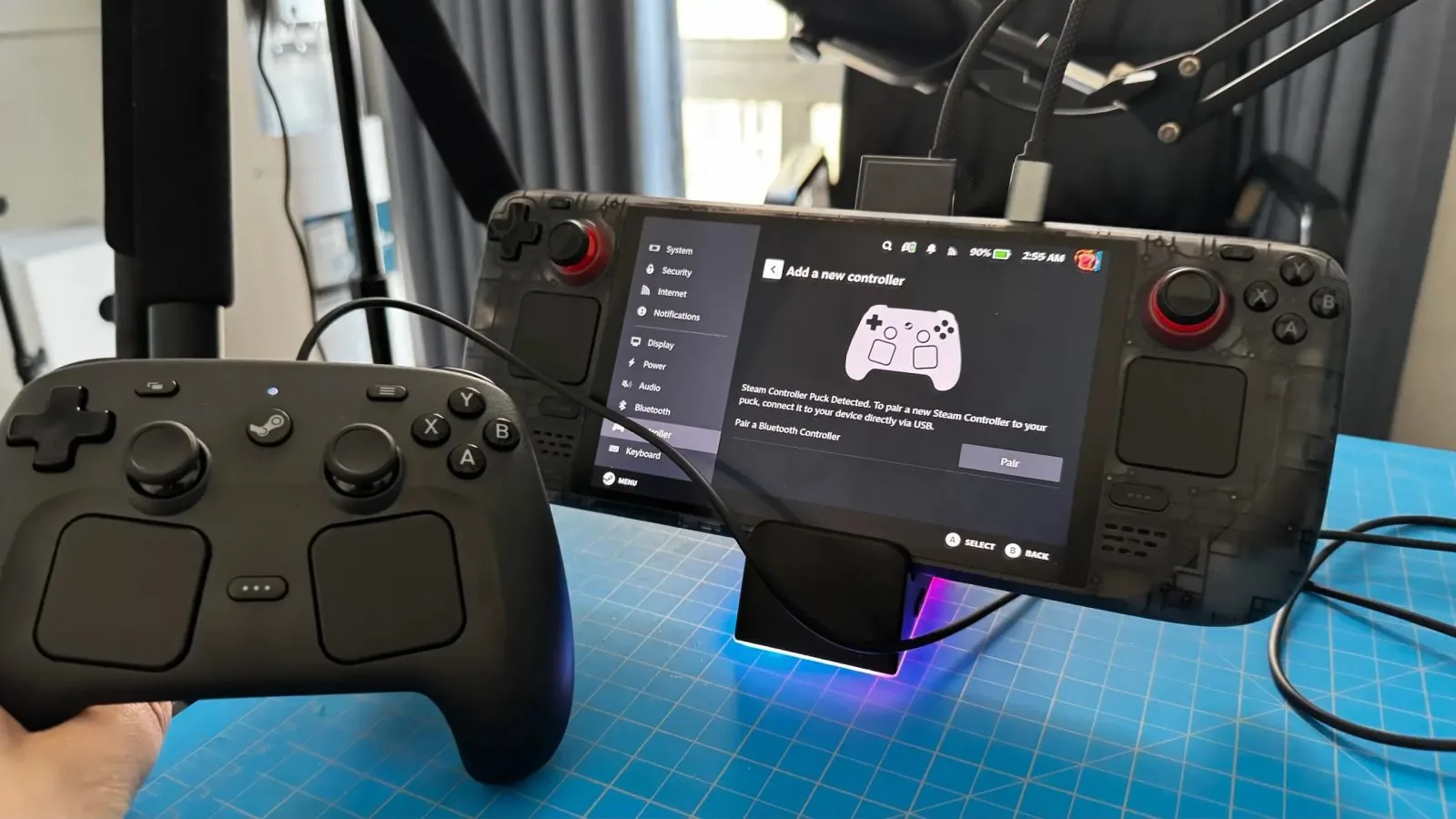
🎮 Steam Deck and the Steam Machine both run AMD silicon — meaning this upgrade lands directly in Valve's lap.
💸 If you've been holding off on a handheld or building a living-room rig, the second half of 2026 just became the move.
So here's the deal: AMD quietly dropped one of the biggest performance stories of 2026, and because it wasn't a flashy keynote moment, half the gaming internet slept on it. FSR 4 — the AI-driven upscaler that previously locked itself to the shiny new RX 9000-series — is officially expanding to older Radeon hardware. That's huge for desktop GPU owners, but the real story is what it means for the Steam Deck and the Steam Machine.
Why FSR 4 Is an Actual Leap, Not a Marketing Bump
Let's be honest: FSR 3 was fine. It was a W when you needed it, an L when you compared it side-by-side with DLSS at any aggressive upscale ratio. The shimmer, the ghosting, the weird halo around fast-moving characters — FSR 3 had vibes, but it didn't have vibes.
FSR 4 is a different animal because AMD finally went all-in on machine learning. Instead of the hand-tuned spatial-and-temporal algorithm FSR has used since 2021, FSR 4 runs a neural network trained to reconstruct frames. Per AMD's own numbers and independent testing, you're looking at notably better image quality at the same performance target — or roughly 30-40% more frames at matched visual fidelity compared to FSR 3.1. That's not a tweak. That's the gap that used to separate DLSS from everything else.
The catch was that until recently, FSR 4 required the FP8 matrix acceleration baked into RDNA 4 — meaning RX 9070, 9070 XT, and friends. Everyone with an RX 6000 or 7000 card was stuck on the older model, watching from the sidelines. Now AMD is opening it up, with optimized paths for older Radeon hardware. It won't run identically — older cards lose some of the matrix throughput — but the quality jump is still very real.

What This Means for the Steam Deck the Steam Machine
Here's where it gets spicy. The Steam Deck runs a custom AMD APU just like its younger sibling - The up coming Steam Machine. Valve has bet its entire hardware future on Radeon graphics, which means every FSR 4 improvement is essentially a free performance patch for Valve's ecosystem.
Think about what FSR 4 specifically fixes for handhelds:
Battery life math changes. Lower internal render resolution + better upscaling = more frames per watt. The Deck's biggest enemy has always been thermals and battery, and FSR 4 directly attacks both.
1080p output on a 7-inch screen finally makes sense when the upscaler isn't smearing fine detail into pudding.
Frame generation pairs cleaner with a better base reconstruction, so 90+ FPS targets become realistic in games that currently cap at 45.
The Steam Machine launch will ship with FSR 4 baked in rather than retrofitted, which is the rarest of Ws for new hardware.
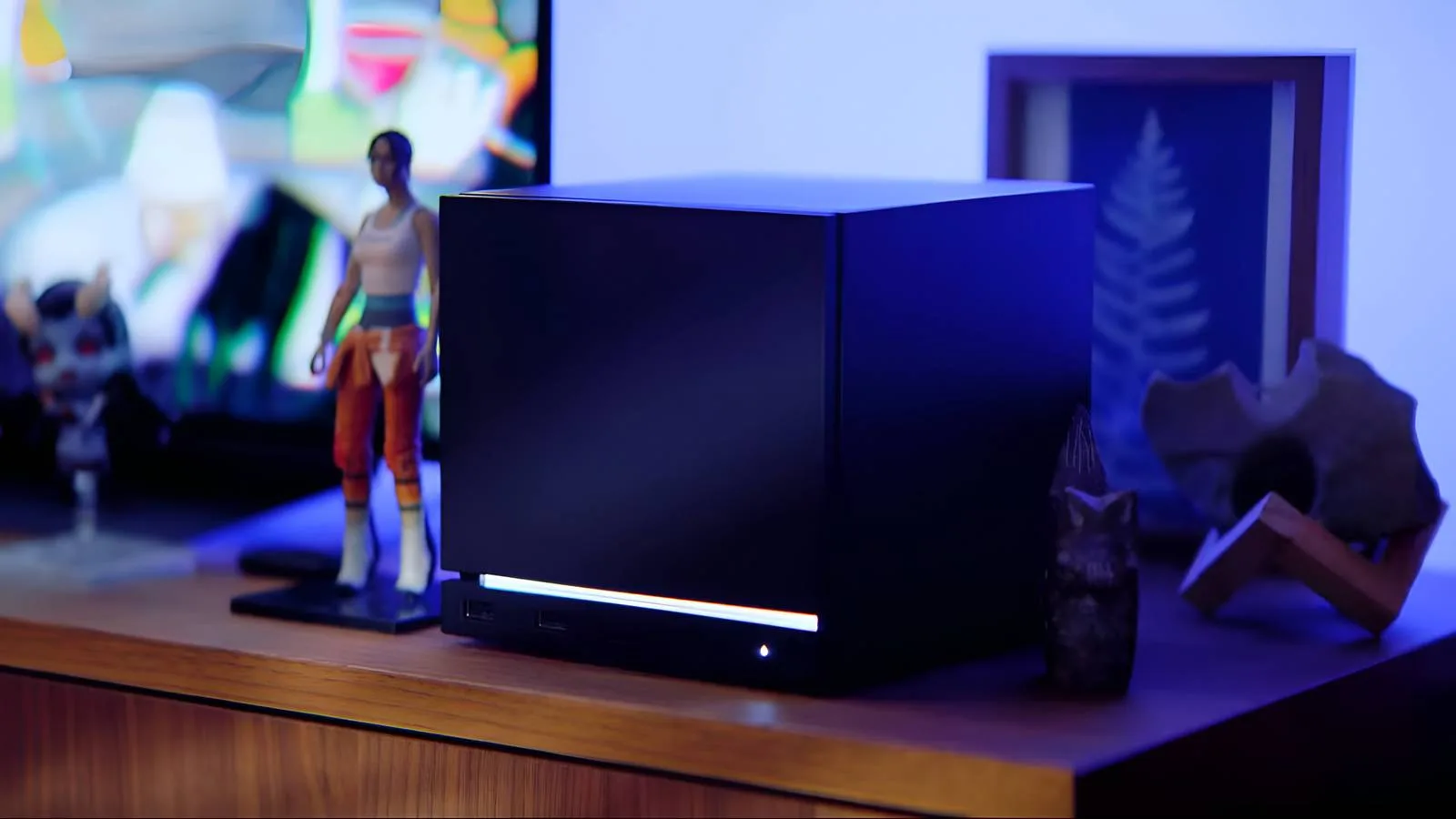
Valve hasn't officially confirmed Steam Machine specs, but every credible leak points to an RDNA 3 or RDNA 4-based APU in a console-shaped box, aimed at the living room. That hardware, with FSR 4 supported from day one across 60+ games and growing, is a legitimately threatening proposition to the PS5 Pro at its price point — assuming Valve doesn't fumble the bag on pricing, which, historically, they don't.
The Other Stuff Worth Knowing
A few quick hits before we get to recommendations:
Game support is exploding. Cyberpunk 2077, Monster Hunter Wilds, Black Myth: Wukong, Stalker 2, and the Resident Evil engine titles are all on board. Avowed got patched. Hellblade II is in.
It's a driver-level upgrade for many titles now, not just per-game integration — meaning even older games can benefit via AMD's driver overrides.
DLSS 4 still wins on pure image quality at extreme upscale ratios, but FSR 4 closed the gap from "embarrassing" to "honestly fine, who can tell at 4K Quality mode."
Linux/SteamOS support is being prioritized alongside Windows, which historically was not the case with FSR rollouts. This is Valve's influence showing.
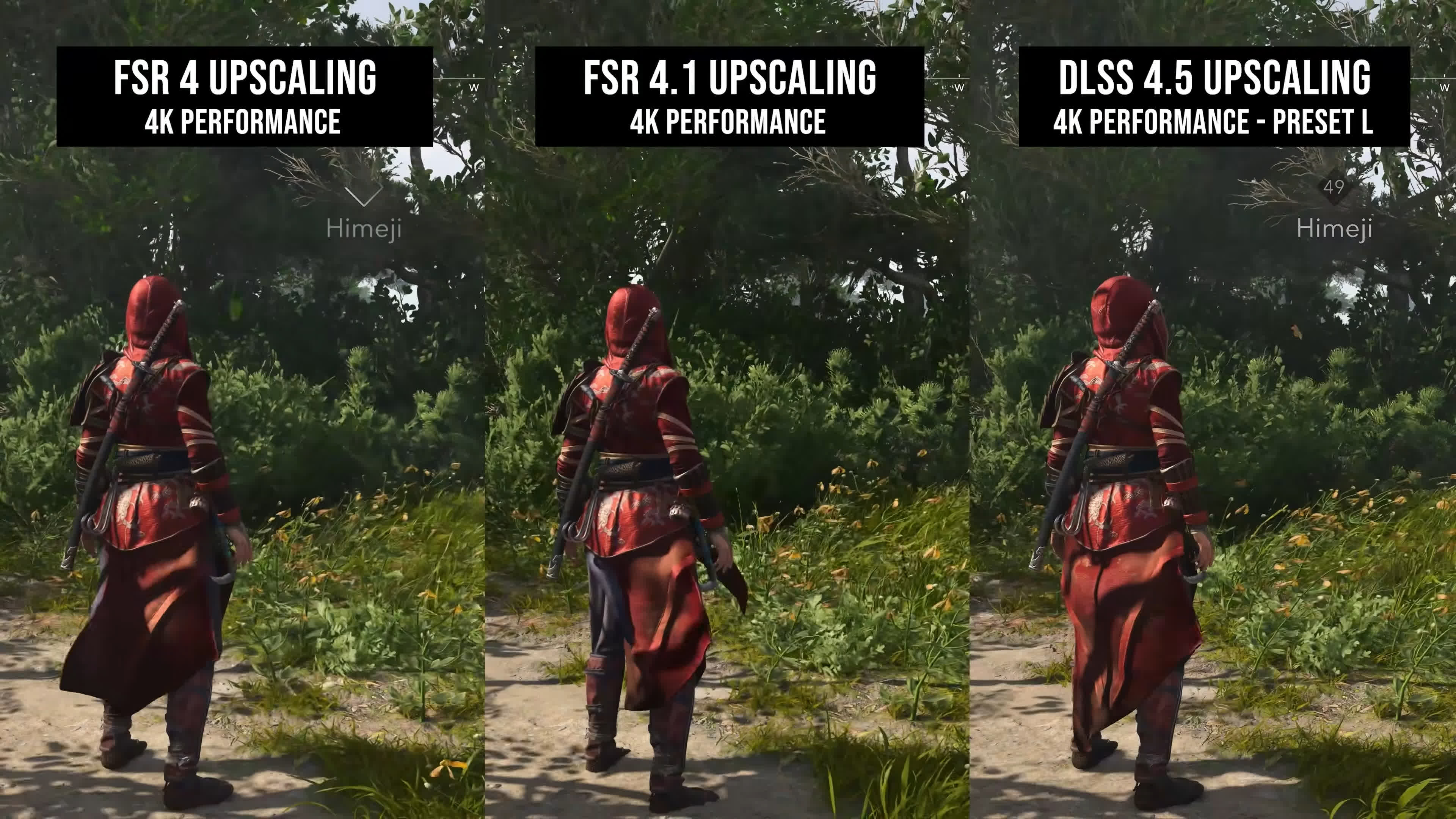
How It Stacks Up Against Nvidia and the Rest
If you've got a 5090 and money to burn, DLSS 4 is still the gold standard and you're not switching teams over this. That's fine. But for the everyone else category — Steam Deck owners, people eyeing a Steam Machine, anyone with an RX 6000/7000 card who felt left behind, or folks building a budget-to-midrange rig — FSR 4 just rearranged the value equation.
Nvidia's advantage was always "the upscaler is just better." That argument is way weaker now. AMD's advantage was always price-per-frame and platform reach (consoles, handhelds, Linux). With FSR 4 expanding to older cards and powering Valve's hardware, AMD is no longer the budget compromise — it's the platform play. The differentiator that wins for the Valve-curious buyer: your handheld, your living room box, and your desktop can all share the same upscaling tech with consistent quality.
🛒 Top Picks
If you want to ride the FSR 4 wave, here's where to put your money right now.
🥇 Best Overall: Steam Deck OLED — Already the best handheld for the money, and FSR 4 makes it meaningfully better with a single update.
AMAZON: Steam Deck OLED — $549🥈 Runner-Up: AMD Radeon RX 9070 XT — Native FSR 4 on the silicon it was built for; the cleanest upscaling experience AMD currently offers.
AMAZON: AMD Radeon RX 9070 XT — $649🥉 Best Value: AMD Radeon RX 7800 XT — Now retroactively getting FSR 4 support; absurd performance-per-dollar in 2026.
AMAZON: AMD Radeon RX 7800 XT — $429The Bottom Line: Valve Just Got a Free Power-Up
FSR 4 expanding beyond RDNA 4 is one of those announcements that sounds technical and lands like a tectonic shift. Valve's whole hardware lineup just got a free performance upgrade, the Steam Machine launch is about to look way more dangerous than anyone expected, and AMD finally has an upscaler that doesn't need an asterisk. If you're shopping handhelds or planning a 2026 build, this is the moment to pay attention.


0 Comments
No comments yet.